By Zahra Zenner
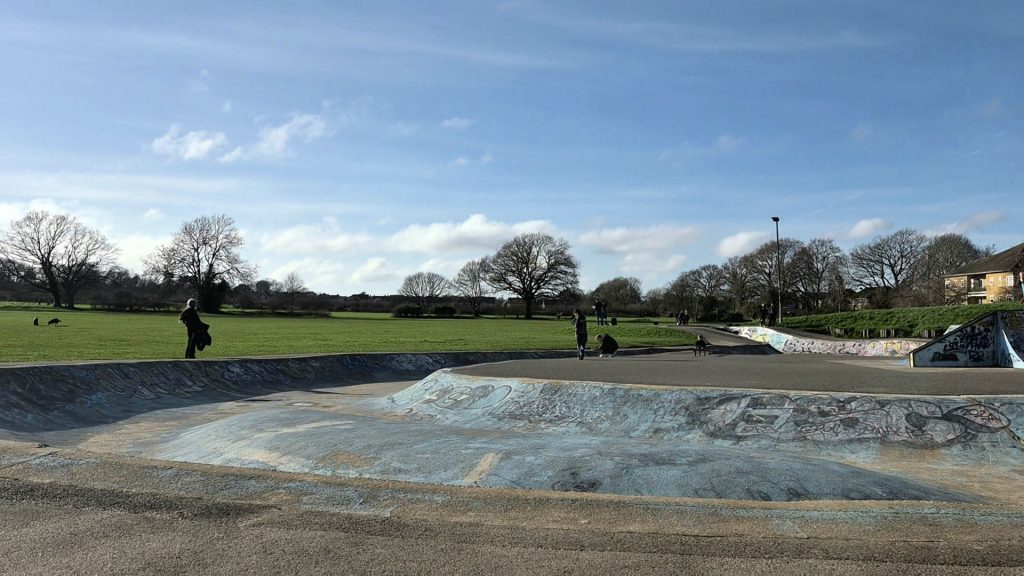
Skateparks have always been looked down upon by councils. The local skatepark where I grew up has been ripped out of the ground as concerns grew over money spent over covering graffiti. Yet to me, graffiti is a really cool expression of art and adds to the ambience of the area. Of course for a council that wants to upkeep a clean and moderately prestigious reputation, it isn’t an ideal outcome but why? The youth of today constantly wonder why there is so little to do in the towns they are growing up in. So taking away a form of artistic expression truly makes a difference to their most loved chill out spots.
After 40 consecutive days of rain in the UK in 2026, the sun is finally shining. Every time I catch a glimpse of the sun I truly appreciate it more and more. Despite the heatwaves the UK faced last year, this year I promised myself I won’t complain about the sun again since being so accustomed to gloomy weather. It reminds me of seasonal affective disorder, known as seasonal depression, which is a clinically recognised form of depression that typically follows a cyclic pattern, emerging and resolving at the same time each year. It hits the hardest, most commonly occurring during the winter months, the condition is primarily linked to reduced exposure to natural sunlight, which disrupts the body’s internal biological clock.
The majority of my friends have expressed how 2025’s troublingly cold winter affected their morale. The lack of sunlight can interfere with the production of key hormones like melatonin and serotonin, leading to persistent low mood, lethargy, and a loss of interest in daily activities. While often dismissed as the winter blues, it is a significant mental health diagnosis that can also affect individuals during the summer months in rarer cases.
So now lets spin back to the main topic. Funding and skateparks. Skateparks are a perfect spot to hang out, to me, it doesn’t matter if you are a skater or not or visiting alone or with good friends. Statistics about skate park funding seem optimistic since the National Lottery is the single largest contributor to skatepark construction, having invested over £22.5 million into wheeled sports since its inception. Most of this funding is distributed via the National Lottery Community Fund or through Sport England’s movement fund grants. Therefore community groups often secure these funds by demonstrating that a new park can improve local health outcomes and social cohesion.
Furthermore, Sport England has committed £1.83 million in strategic funding to Skateboard GB for the period between 2022 and 2027. Rather than funding concrete builds directly, this money supports the infrastructure of the sport, such as coaching certifications and safety governance. These funds help the national governing body provide the technical guidance necessary for local councils to successfully build and maintain parks.
Personally, I believe skate parks are an incredible third space. The concept of the third place, originally coined by sociologist Ray Oldenburg, identifies a vital social anchor that exists outside the two primary environments of home and work. These spaces are characterised by their neutrality, accessibility, and the level playing field they provide for community building. In a modern UK context, where high streets are increasingly dominated by commercial gatekeepers like coffee shops that require a purchase to stay, the skatepark has emerged as one of the last remaining genuine third places for the younger generation.
The psychology of a third place relies on the absence of a formal host; individuals are free to come and go as they please without the pressure of a structured schedule. For young people, who are often heavily monitored at home and strictly regulated at school, third spaces are great. Skateparks provide a rare sense of autonomy. It is a space where social hierarchies are dictated not by wealth or academic achievement, but by shared effort and mutual respect. As youth clubs across the country have faced consistent funding cuts and closures over the last decade, the skatepark has stepped in to fill a massive void in social infrastructure, providing a site for informal mentorship and cross generational interaction.
Psychologically, these spaces serve as a buffer against the isolation of the digital age. Unlike social media, which can be performative, the physical reality of a skatepark encourages low stakes socialising. You do not necessarily need to be a participant to belong; the perimeter is often just as important as the ramps themselves, serving as a lounge where peers can talk and simply exist in public without being moved on by security.
A landmark audit released in early 2026 by Skateboard GB and Betongpark revealed that approximately half of the UK’s skateparks need replacing due to the degradation of materials. Many older parks were built with metal or timber ramps on tarmac, which rot or rust much faster than modern sprayed concrete. Without dedicated maintenance budgets, councils are often forced to close these facilities permanently rather than paying for constant, small scale repairs.
Several towns have seen their skateparks ripped out or fenced off recently because they were deemed ‘potentially dangerous’ or ‘shocking’ in safety surveys. For example, the famous Five Bridges park in Gateshead was forced into an urgent closure in late 2025 due to loose concrete and structural risks. In Diss, Northfolk, England a well loved park had to be secured with fencing for nearly a year because the council lacked the immediate funds required to upgrade its riding surfaces to modern safety standards. When a council removes a skatepark due to maintenance costs or aesthetic concerns, they are not just removing concrete; they are dismantling a psychological safety net. Without these free, unstructured environments, a community loses the social glue that prevents urban areas from becoming collections of isolated individuals. Protecting these spaces is therefore not just about sport, but about maintaining the mental and social health of the town.
Reluctance to funding is exacerbated by a maintenance crisis that is slowly turning the British landscape into a graveyard of rusted metal and rotting timber. A recent audit suggests that half of the parks in the country are currently at risk because they were built using inferior materials that cannot withstand the relentless British rain. When these structures inevitably degrade, councils find it much easier to fence them off and cite safety concerns than to invest in the five figure repairs needed to save them.
Modern concrete skateparks are a much better long term investment but require a high initial capital of between £150,000 and £400,000. While some councils are successfully using the UK Shared Prosperity Fund to replace old parks, many others are struggling to find the 20% match funding required to unlock these larger grants. This financial barrier means that while some areas gain world class facilities, others are left with empty concrete slabs where their old ramps used to be.
The quest to secure a decent skatepark in the United Kingdom is essentially a high stakes game of bureaucratic Tetris. Instead of a single, gleaming vault of cash labelled Skateboarding, campaigners must stitch together a budget from a chaotic patchwork of sources. The National Lottery acts as the primary benefactor, having provided over 22 million pounds to wheeled sports over the years. However, when you consider that a top tier indoor facility can carry a price tag of seven million pounds, that national pot starts to look a little shallow. Meanwhile, Sport England provides nearly two million pounds to Skateboard GB, though this is earmarked for the noble pursuits of coaching and governance rather than actually mixing the concrete.
For the average local councillor, the prospect of a new skatepark often ranks somewhere between a tax audit and a root canal. The primary hurdle is the cost of modern construction, which sits between one hundred thousand and three hundred thousand pounds for a standard outdoor facility. Most of this is scraped together through Section 106 agreements, which is essentially the money developers pay to say sorry for building a block of luxury apartments nearby. Even if the cash is found, councils remain haunted by the twin ghosts of liability and noise. They imagine a litigation nightmare where every grazed knee results in a court summons, or a local uprising sparked by the rhythmic clacking of wheels on concrete during Sunday lunch.
The reputation of skateparks is often unfairly tethered to outdated stereotypes and a misunderstanding of the culture that inhabits them. Historically, these spaces have been viewed by some as hubs for antisocial behaviour, noise pollution, and graffiti. Much of this stems from the era when skateboarding was seen as a counterculture movement, leading to a lingering bias that equates skaters with rebellion or public nuisance. Because skateparks are frequently situated in urban areas or public parks, they attract a high volume of young people, which can occasionally lead to friction with residents who perceive the activity as chaotic or intimidating.
However, this negative perception ignores the reality of what these facilities provide for a community. Skateparks serve as vital social hubs where individuals of all ages develop resilience and physical coordination. Unlike many structured sports, skateboarding requires immense discipline and a high tolerance for failure, as skaters must repeat tricks hundreds of times to achieve mastery. This fosters a unique sense of persistence and mental toughness. Furthermore, skateparks are inherently democratic spaces; they are usually free to access and bring together people from diverse socioeconomic backgrounds who share a common passion.
When properly managed, a skatepark actually reduces illegal skating in less appropriate areas such as business districts or private plazas. By providing a dedicated environment, cities can channel that energy into a safe and constructive space. They are also places of mentorship, where older participants often guide newcomers through the etiquette of the park and the technicalities of the sport. Far from being a breeding ground for trouble, a skatepark is a modern community centre that promotes health, creativity, and mutual respect. Challenging the stigma requires looking past the aesthetic of the sport to see the genuine athletic and social value it provides to the youth.
The end result is a postcode lottery where some lucky towns enjoy world class concrete bowls while others are left with a sad, empty tarmac square. Without a shift in how these spaces are perceived by the people in suits, they will continue to be treated as dispensable nuisances rather than the vital community hubs they actually are. This lack of vision ensures that skateboarding remains a struggle against both gravity and the local planning committee. Ultimately, survival depends on turning more councils into allies before the last ramp is carted away.
Skate parks will continue to be a fond favourite of mine. Recently at my local skate park I have seen people from the age of 4 years old to over 40 years old enjoy showcasing their brilliant skills there. With more funding these skate parks can become better than before ; all it takes is the deserved recognition from local councils across England and the UK.



Leave a Reply